
Milton Friedman is one of the most authoritative and independent figures in the fields of economics and political philosophy today. His research and published works have established him as the leading monetary economist of his time and his uncompromising advocacy of the many aspects of a free society and the free market have led to a re-examination of ideas and policies on the part of many people and governments.
In this publication, the proceedings of a seminar conducted by the Centre for Independent Studies, Milton Friedman is joined by Australian economists Michael Porter, Fred Gruen and Don Stammer in the discussion of three crucial and interrelated issues- taxation, inflation and the role of the government. Professor Friedman draws together a number of his ideas and relates them to the changing pattern of ideas throughout the world and how this has affected these issues.
Major tides of opinion
As I look at the areas we are interested in. the areas of the role of government and of economic arrangements, I think we have had two major tides of opinion in the past two centuries. One was set in motion, if you want a convenient date, in 1776 with the publication of Adam Smith’s Wealth of Nations. That was a tide of opinion going against the mercantilist governments of the time, the centrally controlled welfare states of the 18th century. It was a tide of opinion in favour of a greater degree of free markets, of laissez-faire, of competition. Adam Smith himself, when he wrote his book, thought that it was vain to hope that you could ever succeed in achieving free trade. He used a fine expression that it was ‘as absurd to expect that an Oceana or Utopia should ever be established1. And yet 70 years later in 1846 you did achieve complete free trade in Great Britain and the tide of opinion (that dominant sentiment for the rest of the 19th Century) was in the direction that Adam Smith had started. That tide of opinion was world wide. It was manifested not only in Great Britain. It was manifested on the continent of Europe; it was manifested in the United States; it was manifested even as far away as Japan where, after the Meiji restoration in 1867, Japan developed along essentially free market, free enterprise lines.
Toward the end of the 19th century, there began to be a change in the tide of opinion. A.V. Dicey, the great British constitutional lawyer, set the turn in opinion as occurring some time around the 1880s or 1890s, when he claimed that British public opinion turned away from belief in laissez-faire and individual freedom and toward a belief in a greater role for government and collectivism. He describes it as an emerging tide of collectivism. As in the case of Adam Smith’s time, it took a long time before the change in the tide of opinion came to affectin any very significant way actual policy and behaviour. In Great Britain it was reflected in the pre-World War I movement towards the welfare state, in the introduction of various social insurance measures and the like. It was not fully reflected in the United States in policy until after the New Deal got started in 1933. But again it was world wide. It was reflected in India and the kind of government they adopted after it gained its independence in 1948.
It ‘was reflected no less in the success of the communist revolution in Russia, and after World War I1 in the success of the communist revolution in China. All of these were reflections of that same tide of opinion, of a loss of confidence in markets and individualism and an increase in confidence in collectivism and centralisation. In my view a new tide of opinion has been turning ever since shortly after World War I1 and it is a reverse tide, a tide away from centralised control and collectivism, a tide towards a greater role for individuals and for free markets. Again it isworld wide. The first manifestation of an actual policy curiously enough came in the Far East. It came in Hong Kong, in Singapore and Taiwan – in that Asian crescent of countries which experienced a drastic change after World War I1 and which have been the great succkss stories of economic improvement in the well-being of their people.
The fascinating thing about them is that all of them departed from the earlier pattern. They departed from the pattern that was set by India and by many other countries in their adoption of central planning, and instead they relied primarily on the market and were, as I say, great successes. But that same tide of opinion has been affecting policy in the whole of the rest of the world. We have dramatic examples of it right now. What is happening in Poland could not have happened fifty years ago. The attempts by a country like Hungary to introduce market mechanisms provide another example.
My wife and I spent a number of weeks in September in China and there again, in the attempt to introduce market mechanisms, you can see a reaction against highly centralised control. I stress ‘attempt’ because I have no great confidence in how far that will be carried or how successful it will be, but it is a dramatic example of the power of ideas and the extent to which they do spread their influence and cannot be contained. That same tide was demonstrated in Great Britain in the election of Margaret Thatcher; in Sweden in the defeat of a Social Democratic government that had been in office for forty years; most recently in the United States in the election of Ronald Reagan as President and in the change in the character of the U.S. Congress, particularly the Senate. I have the impression that the same tide has not been completely absent from Australia and indeed it is reflected in the number of people who are here today and in the success of the Centre for Independent Studies.
It is fascinating to me how small organisations like the CIS, independent of official sponsorship and governmental bodies, have been able to exert a tremendous influence. In Great Britain the Institute of Economic Affairs in London – Ralph Harris’ and Arthur Seldonls institute – has had a far greater influence on attitudes and ideas within Britain in the past twenty years, in my opinion, than any of the much better known or much more prestigious institutions of learning. In Canada the Fraser Institute in Vancouver has been playing the same kind of role and it has been having an extraordinarily great influence. I hope your Centre here will have the same kind of influence. But the title of this session is Taxation, Inflation and the Role of Government and you may be wondering what I’ve been saying has to do with that. I think it is closely related to our subject because it is very easy to see that the trends that I have been talking about have been manifested fundamentally in those areas. They have been fundamentally about the role of government and that has been reflected in turn in the extent of taxation and the emergence of inflation.
The role of government
The whole question has been: What is the appropriate role of government? Is it, as Adam Smith urged, to construct a system of natural liberty in which people are free to pursue their own ends, in which the invisible hand will lead people who seek to pursue only their own interests to promote the social interest? Or is the appropriate role of government, as the Fabian socialists and the other collectivists would tell you, to serve as a benevolent parent to make sure that its wards act in a way which is in their own best interest? Is it to have a very visible hand of government which prevents the invisible hand from carrying out its functions and which guides people in the course of their lives?
The difference between these approaches is not really one of objectives. I don’t mean to say that the people who tend to pursue these may not have different objectives. Nor do I mean to say that the one system or another may not give power or may not automatically render power unto people with different objectives. The intellectuals who have largely developed and fostered these ideas have had essentially the same objectives, but they have envisaged different techniques by which those objectives could be carried out. The reaction that has occurred from time to time, the change in tide of opinion and its impact on policy, has not in my opinion come primarily from the success of intellectuals of one kind or another in persuading the people. It has come from the peoples’ actual experience with the results of the policies that were adopted.
If you go back to the 19th century, the laissez-faire policies were very successful from the point of view of those who set them up. Britain had an enormous growth in income, prosperity and influence in the latter half of the 19th century when it was following a laissez-faire policy. Japan emerged as a modern nation at the end of the 19th century when it was following essentially the same policy. And so on down the line. But at the same time that very success rendered some features of the landscape more visible and brought more attention both to their evils and to the possibility of doing something about them. And that in turn, in the natural human reaction in which people always take good things for granted and always regard them as their due, led them to regard any bad features of the landscape as being a result of malevolent, evil people who seek to harm their fellow man. A natural reaction consequently was the development of the idea that we ought to use the instruments of the State and of Government to improve the lot of the ordinary man and to promote welfare.
Experience has again been producing a turn away from that. Governments have grown and grown. They have expanded their role and, lo and behold, they seem not to have achieved their objectives. The well-meaning objectives of a paternalistic government that will take from some to benefit others, has turned out to produce very disappointing results and for very understandable reasons. And those results have been most manifested in exactly the items that are the topics of this talk. In the area of taxation, tax burdens have grown. The fraction of people’s resources that has been taken over by their governments has become increasingly large and people world wide have felt that they have not been getting their money’s worth for the taxes they are paying. People in all countries have felt driven to take whatever measures they can to avoid those taxes – to engage in what is called ‘underground activity’ – to try to achieve their income in ways that so far as possible escape tax. And of course they have been driven to protest against the size of taxation. The public reaction against taxes has been one of the factors that in turn has given rise to inflation.
As government spending has risen, governments everywhere have tried to raise resources to spend, without imposing explicit taxes on their constituents. And one way in which they have been able to do so has been by financing their spending through creation of money. That in turn has given rise to inflation. Now most people in the world really like inflation, at least when it affect; the prices of the things they sell, but they begin to object to it when it affects notably the prices of the things they buy. Sooner or later it does have that unfortunate effect and therefore sooner or later you do get a public protest against the emergence of inflation. It’s fascinating to note that the English constitutional lawyer I spoke of earlier, A.V. Dicey, writing in 1913 in the preface to his book Law and Public Opinion In the Nineteenth Century, said that if there ever comes a check to a socialist government it will be because of the reactions of people to high taxation.
I think that is one of the most brilliant and prescient statements you can possibly imagine – he was 50 years ahead of his time. I think that has been what we have been observing and all over the world therefore, there has been a reaction in an attempt to narrow the role of government, reduce inflation and limit the scope of taxation. Whether that move will succeed or not is an open question. It is a very difficult thing; everybody is interested in reducing taxation, provided the particular benefits he thinks he gets from government are not reduced. Let me go on by saying a few more specific things about these three topics: taxation, inflation and the role of government.
Taxation
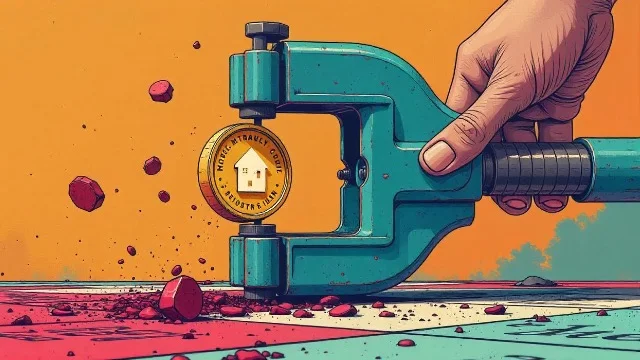
I think there is a great misconception about what taxation is. The true tax on any people is what government spends, plus the additional cost government imposes on the people in the course of getting the funds to spend. Let me elaborate on that in a moment. We read a lot in the papers about governments having deficits and about the problems of raising enough taxes to pay for spending. Now that’s nonsense. Governments never have deficits in any meaningful economic sense. I don’t know the figures well enough here for Australia, but if the United States government in the current fiscal year spends $650 billion and takes in (in what are called taxes) $600 billion, who do you suppose pays the other $50 billion? Is there some Santa Claus somewhere who pays that $50 billion? I don’t think even Saudi Arabia is willing to come and give us that much foreign aid. The $50 billion is paid for by the American people and it is paid for in the form of taxes.
But the taxes are hidden. In so far as the $50 billion is financed by printing money, people are paying for it in the form of the hidden tax of inflation. In so far as it is financed by supposedly borrowing from the public, that is essentially a claim on future wealth and so then it represents a hidden tax on the wealth of the country. In an important sense government budgets are always balanced and the real tax burden on the public is to be measured by what governments spend. Moreover that’s an underestimate of the tax burden on the people because, over and above what governments spend exclusively, there are costs imposed on the public in connection with the collection of those taxes. Those costs ought to be included in estimating the burden of taxes on the people.
If somebody, because it’s a way of evading tax, invests his funds in a way that is less remunerative than other investments open to him, tax considerations aside, then he is doing the equivalent of paying taxes. That’s a tax burden. Not to mention the more trivial but equally burdensome problem that, as you spend time to fill out your tax returns you are an unpaid clerk for the government. Government spending ought to include the cost of your time filling out the tax return and that ought to be included in both spending and taxation. I once made an estimate in connection with a Newsweek column I wrote that the time people spend in the United States in filling out income taxes would provide enough resources to build 50,000 houses a year. ~nd that’s an honest-to-God cost. Those are 50,000 houses that the American people are doing without, because people instead are spending their time trying to invent appropriate figures to reduce their tax burden. In addition to which, in a country like the United States and I am sure in your country, some of our ablest people are devoting their talents to the strictly unproductive activities of finding ways in which people can avoid taxes.
The producers of tax shelters are able people. They are pursuing their interests and the interests of their clients, but from a social point of view that’s a complete and utter waste and it ought to be included in the tax burden which is borne by the public at large. Now over and above that you ought also to include in the total burden of taxation, the cost of regulations that are imposed on the public at large. In the United States Murray Weidenbaum, the current chairman of the Council of Economic Advisers, who was head of the Centre for the Study of American Business at Washington University in St. Louis; has made very detailed estimates of the cost of complying with governmental regulation, of filling out those 4,336 forms, of doing things in a different way than you would want to because there is some regulation requiring you to, and so on. His estimate says that the total cost-some years back was well over $100 billion a year. Well that means that the Federal budget instead of being $650 billion was really $750 billion so far as that item was concerned. I
n both the United States and in Australia at the moment, recorded government spending – what government spends at the Federal, State and local levels – is somewhere around 38% of the national income. If you could include this indirect government spending (the burden on taxpayers of the cost of collecting the taxes, the inefficiencies and distortions and the like) it would be much higher than that. Now from the point of view of people who believe in self government there is nothing wrong with that, provided that people believe they are getting their money’s worth. But suppose you went around to the people of this country and said: ‘You know, 40% of your income is being spent for you by government. You are working from January 1st to roughly the end of May to pay the cost of government and the rest of the time you are working for yourself. Are you getting your money’s worth?’ What do you suppose the answer would be? Well there are a few government civil servants who would probably say ‘yes’, but I doubt very much if there would be many other people who would say !yes1 , and I know for the United States there are very few people who would say ‘yes’.
It is this reaction to the feeling that people are not getting their money’s worth which has been at the bottom of the tax revolt that has swept the United States and that has been a large part of the political atmosphere of the past few years. It is in the self interest, of course, of those of us who get involved in government to make the collection of taxes and the bearing of this burden as painless as possible. One of the most efficient devices which is used for this purpose is to tax in forms which are invisible. Those of us who would like to have the public aware of what is going on ought to be in favour of having taxes as visible as possible.
The most invisible taxes we have in various countries, in my country and in yours, are those such as company taxes. One thing we know is that a company can’t pay any taxes. Only people can pay taxes. What a company can do is collect taxes. What happens is that a company collects taxes from its stockholders, from its workers and from its customers and turns over the proceeds to the government, but it does so in such a way that the workers and the stockholders and the customers hardly know that they have paid taxes. That’s equally true in the United States, not only with corporate taxes but with many of the other invisible taxes we have. In our various countries we have developed systems for collecting personal direct income taxes at source, so they are taken out of your pay cheque before you get it. I have to confess that I am guilty of having played a part in the United Sta.tes in designing our system when I was working as an economist at the Treasury Department during the early part of the War and I may say my wife has never forgiven me.
That is another device which has made the burden of taxes less visible. Personally I believe, that in so far as you are going to have taxes, they should be as visible as possible. In my opinion, apart from a few minor exceptions (for example, fees in the form of taxes which are really designed to pay for services – gasoline taxes designed to pay for roadways being one case that comes to mind) the least bad form of taxation is a straight flat rate tax on all spending above a minimum charged on everybody and collected in such a way that people know they are paying it. The second least bad tax is a similar flat rate tax on all income above a minimum. Those seem to me to be the most visible and least bad taxes.
Inflation
As I said, what is true about taxation has been true of inflation. It too, in my opinion, reflects a response to the growth of government and to the expansion of the role of government. Inflation is a monetary phenomenon which is produced by a more rapid increase in the quantity of money than output. Under modern circumstances (this was not true many years ago) it is everywhere produced by government. Your government at the moment has a target of inflation for the next year of about 9%. Now I doubt very much that any of you have heard a major leader of your government get up and proclaim that the government’s target for inflation next year is 9%.
Maybe I’m wrong and yet when the government announces that its target for monetary growth is 9-11%, that’s equivalent to saying its target for inflation is somewhere around 9%. Inflation has been resorted to again in considerable measure as a way of making less visible the level of taxation to which the public is subjected, because that again tends to be in the form of a hidden tax. Here again there is a widespread attempt around many countries in the world to reduce the level of inflation and almost all of them have come to recognise that that involves reducing the rate of monetary growth. But objectives are one thing and achievements are another. The record is not yet in as to whether any of the governments will be able to achieve their objectives. That’s a slight exaggeration: there are some records in, for Japan has done very well over the past eight years.
There is not very much more to say about inflation except to say that it has in fact been accompanied over recent years by slow growth and we have had the phenomenon of stagflation – inflation accompanied by slow growth – and that higher and higher inflation has gone hand in hand in country after country with higher and higher rates of unemployment. This is something which many people at one time thought was a paradox, but it is not a paradox. The fact is, in my opinion, that both inflation and slow growth have been the common consequence of the expansion of government. In its growth and expansion, government has on the one hand promoted inflation and on the other hand has promoted inefficiency and rigidity, and in the process of promoting that inefficiency and rigidity there has been a tendency towards slower growth.
Current tide of opinion
I think we are at the moment living in a very exciting time, because it is only, as I said at the very outset, about once every 100 years that you come to the stage where there is a real possibility of a decided change in the direction of governmental economic and social policies. We are, I believe, at one of those turning points now. It is by no means certain that it will be a successful turning point. The consequences if it is not, I fear – the consequences of continuing on the path of bigger and bigger government or more and more taxation or more and more intervention – will be that there does ultimately come a point beyond which a country will degenerate into a completely collectivist state. There are very few examples in history of collectivist states that have peacefully converted to democratic free societies and as a consequence I think a great deal is riding on whether we can achieve this kind of a transition. It is riding on whether we can reverse the course, on whether we can move toward a lower level of government, a lower level of spending, and a lower level of taxation and intervention.
Current public opinion in United States
I am at present reasonably optimistic that we in the United States have a fair chance of success in that direction. We have a public opinion at the moment which is very favourable to a move to lower government spending, taxation and intervention. We have a President who is determined to achieve such a change and who has proclaimed a policy which would be effective to it. The members of Congress and our elected officials have been listening to the voice of the people and have been discovering that it may be politically profitable for a change to move in that direction. But all that having been said, it is still very much of an open question, because history suggests that it is much easier to avoid going in the wrong direction in the first place, than it is to reverse course once you have gone that way. You tend to build up all sorts of vested interests and all sorts of restrictions to movement.
Prospects for Australia
Australia has been very fortunate over a long period of time in that it has not fallen prey to those excesses. I am always fascinated by an example that goes back a long time and with which I will close. Back in the 1920s and 1930s, students of economic development and economic history used to compare Australia and Argentina. Now I know that Argentina being in South America is not in the front of your consciousness in Australia, but it is a very interesting comparison. The two countries used to be compared because they had a great deal in common. They were both countries of almost entirely European settlement. As you know, many of the South American countries have very large admixtures of native indians, but Argentina was almost entirely settled by Europeans as was Australia. Both were countries with rather spectacular natural resources of a similar kind, much land, great opportunities for agriculture and particularly for animal husbandry, for beef and for sheep. Both were countries that had been progressing rather well and rather rapidly. And when people would talk about which of the newer countries had the greatest chance to emerge and become productive and affluent, they would tend to lump Australia and Argentina together.
If you look at the history of the two countries since then, their courses have diverged very much. What produced that divergence? There was nothing that happened to the natural resources of Argentina. There was nothing that happened to the quality of its people. What did happen was a political change: the emergence of Mr Peron and the Peronist movement of a collectivist socialist society; a rigidified society which stopped that Argentinian growth and development largely in its tracks after the artificial stimulus of wartime boom had disappeared, and which led to a real catastrophe, an experience from which it is only now trying very hard and not very successfully to recoup. Australia was very fortunate in this respect in that it managed to avoid that kind of development. You retained your democratic, largely market-capitalist system, though it was filled with all sorts of protection and all sorts of rigidities and yet with enough flexibility and fluidity so that you were able to continue on an upward path. But if Australia were to go the way of Argentina in its political system it would go the way of Argentina in its economic system. That only illustrates how much is at stake in your capacity to control your destinies, to turn things around and to start putting a greater degree of freedom into your polity.

Australia has a mental health crisis, but not the one we think. Despite decades of...