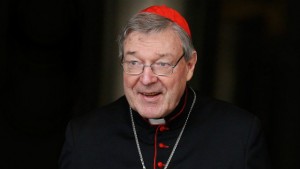
 The Royal Commission into Institutional Responses to Child Sexual Abuse has undertaken a demanding and complex task given that thousands of victims are expected to testify before it concludes its work. Chaired by NSW Supreme Court Justice Peter McClellan, the Commission — established by the Gillard Government in 2013 and set to run for four years at an initial estimated cost of over $430 million — has three main objectives. First, it is to provide a forum for victims to tell their stories and have their experience acknowledged. Second, it will investigate where institutions have erred in dealing appropriately with abuse and to recommend procedures that can alleviate the impact of abuse. And third, it must recommend ways to improve law, policy and practice, including removing impediments to the reporting of abuse, so as to give children better protection in future.
A royal commission is an enquiry established under Letters Patent, and not a trial. Its purpose is to investigate what has happened, to hear testimony, to collate evidence, and then to issue a report that can include recommendations for legal proceedings to be pursued. Appearing before a royal commission is a weighty matter and testimony is given under oath. But those who do give testimony do so because they have been called upon to assist with an investigative enquiry and not because they are facing criminal charges or civil proceedings.
Yet during the two years in which the Royal Commission has been sitting, the public appetite for the proceedings has been whetted by one overwhelming objective: what former Prime Minister John Howard recently called, ‘Get Pell’.
Cardinal George Pell’s third appearance before the Royal Commission last week was the one people had been waiting for. Bruised, perhaps, and a little dishevelled from his recent kicking by antagonists in the Australian media, Pell will regain his footing soon enough. Plenty of real villains — some in jail, some deceased — have populated the enquiry into this disgraceful saga, and many held to the fevered hope that this time the true extent of Pell’s culpability would be laid bare. And he must come home for us to see it, they insisted. Then when the faggots at the foot of the stake were kindled, they would know for sure how fully justified they were in heaping all the sins of child sexual abuse in his head.
The expectations placed on Pell have always been incredibly high combining both the forensic and the therapeutic. No matter how effectively he might meet the forensic demands now placed upon him by the Royal Commission, if Pell didn’t make us feel better or happier or healed after his testimony, he will have failed. Pell’s appearance before the Commission, offered willingly and done cooperatively beginning late each evening, had become about much more than the search for the truth about what happened in Victoria as far back as the 1960s.
Little surprise then that a few days after Pell’s final appearance, Senator Michaelia Cash went on ABC’s Q&A to announce the verdict. She devised a new test for church leaders: call it the ‘Jesus test’. Taking a highly selective view of the first century Jewish teacher whose gritted determination to proclaim a new kind of relationship between God and humankind led to betrayal by his co-religionists, and to torture and execution at the hands of the occupying Roman power, Senator Cash said: “Jesus at the end of the day was someone who had compassion and who had empathy.” Confident in her theology, Senator Cash then said she would expect nothing less from church leaders, “especially for those victims in verbalising what they went through, to at least show them compassion and empathy.”
This, of course, is the same Jesus who said he came to bring not peace but a sword; to create division within families; who caused a riot in the temple precinct; and who spurned a foreign woman until she turned the rhetorical tables on him. He also told us to sell our possessions and give everything to the poor. The words “I feel your pain”, however, do not fall from Jesus’ lips in any English translation of the Gospels. Yet Cash’s beef with Pell is that she didn’t see him ‘reach out’ to the victims of sexual abuse and say, as she is sure Jesus would have said, “I feel your pain.”
Jesus didn’t say it, and Cash didn’t hear Pell say it. But no one who has testified before the Royal Commission has ever denied there is real pain caused by terrible ordeals. Young children in Victoria suffered bitterly at the hands of a number of cruel and sadistic men who used the privilege of priestly office to cloak their criminal behaviour. The living victims of serial paedophiles Peter Searson in Melbourne and Gerald Ridsdale in Ballarat, among others, are now adults, but they bear the scars of their abuse. Some of them travelled to Rome to hear Pell give his evidence via video link to the Royal Commission sitting in Australia. They wanted to hear him account for himself, to find out what he knew, and when.
Back in Australia, we watched and waited for Pell, currently the third most senior church official in the Vatican, to tell the Royal Commission what he knew. Over the course of nearly 20 hours under oath, Pell was questioned about the years when he was a young priest serving in the Diocese of Ballarat under its hapless and negligent bishop Ronald Mulkearns, and then about the years when he was auxiliary Bishop of Melbourne with responsibility for priests such as Searson.
Pell’s performance was rocky, he didn’t always go well under questioning, and at times appeared tetchy when responding to questions from McClellan or from Gail Furness SC, counsel assisting the Royal Commission. But on the second day of his testimony he uttered the clumsy words that stunned the nation. Furness pressed Pell on just how much he knew about Ridsdale’s behaviour. Very little, was the answer, and he added that Mulkearns’ silence about the priest, who was moved from post to post in the diocese, amounted to “a gross deception.” But did Pell know anything at all about the allegations made against Ridsdale or about the decisions to move him around? The response drawn out by Furness was stunning. “It was a sad story and of not much interest to me,” said Pell who, by the late 1970s, was running the Catholic Institute of Education. “I had no reason to turn my mind to the evils Ridsdale had perpetrated.”
Not of much interest? The Guardian’s David Marr, for long a trenchant critic of Pell, considered the answer a “devastating admission.” Even those who had stood by Pell and defended him against his critics were shocked. News Corp columnist Andrew Bolt said it was “disastrous” and added his opinion that Pell’s answer “will be hung around his neck for the rest of his career”, describing the prelate as “the priest who went by the book and not the heart.” Critics from the Left and the Right seemed at that point to have converged in their view that the Royal Commission’s investigation had finally uncovered the dark truth lying at the heart of the Catholic Church’s response to child sexual abuse: callous indifference. “Hear No Evil, See No Evil, Stop No Evil”, proclaimed Bolt’s own paper, the Herald Sun on its front page the day after Pell uttered those words.
But Bolt subsequently changed his mind about Pell’s testimony and got caught in a fracas of his own as he tried to explain that change, facing the mockery of ABC’s Media Watch into the bargain. Bolt’s error? Not that he had reconsidered the facts and then altered his opinion; but that his altered opinion had swung once again in favour of Pell.
It is easy to condemn Pell for his clumsy and ill-chosen words, however accurately they might have described his thoughts at the time when he held no official responsibility for handling complaints about child sexual abuse perpetrated by priests. What his critics have missed, however, is the very issue that should be at the heart of the Commission’s enquiry: how did Pell himself handle instances of child sexual abuse when he was in a position of authority?
When Prime Minister Julia Gillard announced the Royal Commission she said, “I specifically hope that its recommendations will help ensure that this never happens again.” Some 16 years earlier, in 1996, when he did exercise full authority as Archbishop of Melbourne, Pell had already taken prompt steps to ensure that the negligent indifference of bishops like Ronald Mulkearns or Frank Little would not be repeated.
Pell established the Melbourne Response to handle allegations of sexual abuse and misconduct perpetrated by any person, lay or ordained, under the authority of the archbishop. All allegations were to be investigated by independent commissioners. Counselling, pastoral care, and even compensation were to be made available by the commissioners who acted independently of, but made recommendations to, the archbishop. In other words, Pell put in place a practical, effective and independent strategy for dealing with an issue that had already dogged the church for many years.
Yet for as long as the Royal Commission has been investigating the institutional response of the Roman Catholic Church to child sexual abuse, George Pell has been targeted as a principal villain and culprit of this evil scandal. We won’t learn what the Commission makes of Pell’s many hours of testimony, along with what it finds he did and did not know, until it publishes its report. But criticism of Pell goes far beyond his culpability, or lack of it. The charges levelled at him in the media and beyond turn not so much on what he knew but on what he should have known; not on what he did but on what he should have done. As the US journalist and Vatican-watcher John L. Allen has remarked, “Those are serious questions, but there was no suggestion of any act that would rise to the standard of a crime, and the same questions could be asked of virtually anyone else who was in Ballarat at the time.”
George Pell is attacked simply for being Pell and because many of his critics openly dislike the man. “I think why there is currently so much criticism of George Pell,” Senator Cash said on Q&A, “is because despite what he may or may not have known, it is the way that he has approached the victims of the royal commission.” Really? What does Cash know about Pell’s approach to victims? What does she know about their response to him? At the end of his testimony Pell met with a number of the abuse survivors, relatives and supporters who had travelled from Australia. According to some accounts it was a very positive encounter. Pell has pledged his support for efforts to help recovery from sexual abuse and has also offered to help establish an Australian research centre for abuse prevention and detection. There is no reason not to take him at his word. Yet many still want to blame him personally for the institutional sins of the Catholic Church.
The reserved manner, bearing and style of this distinguished prelate don’t appeal in an age when public emoting is de rigeur and when the only way someone in public life, such as a prime minister, can convince you that she or he truly feels your pain is by tearing up in front of the TV cameras. Those with whom we cannot feel an immediate empathy or identity are dismissed as arrogant or out of touch. We are often quick to assume we can know public figures by drawing on their media appearances and their statements whereas we actually know very little about them as individual human beings. George Pell may not do so well in an age of instant celebrity and public displays of emotion but that alone — and before the Royal Commission has even handed down its report — is poor reason to question his sincerity or integrity.
Pell is not just out of step with sentimental temper of the times, but also with the larger cultural zeitgeist. A key element of the mischief in media coverage of Pell’s appearances before the Royal Commission has been to create the impression that the Cardinal was, himself, personally responsible for failing to prevent egregious cases of criminal activity. Rather than be content with establishing what he did know, suspicion has been fuelled in the minds of Pell’s many accusers by wild speculation about he should have known. This has served a bigger purpose. Blurring of the lines between fact and falsehood, between objective truth and subjective hypothesis, has helped supply apparent proof that all traditional institutions and sources of moral authority in our society, especially the churches, are morally corrupt and riven with hypocrisy. It’s a conviction dear to the hearts of those whose minds have been shaped by the social revolution of the 1960s and whose counter-cultural values lead them to question the principal institutions of civil society — precisely the kind of people who dominate the opinion-shaping media class. Satisfying though all this may be to these counter-cultural keyboard warriors, the rest of us need to be alert to the assault being launched not just at the Christian church, but at truth, at fair play, and at due process in the supposed name of stamping out crimes against children.
Terrible crimes of child sexual abuse have been committed over many years by a small but significant percentage of priests and religious. These men have wrought irreparable harm against their victims who continue to wrestle with feelings of guilt, taint, and shame. In many cases, as we now know, bishops shirked their moral and legal duties and merely shuffled the perpetrators from place to place. But the work of the Royal Commission, and the contributions of witnesses such as Pell, will help, we may truly hope, to bring this dreadful era to a close; although the church will have to endure its severe loss of reputation and social standing for some generations to come.
Our satisfaction with the efforts of the Commission in helping to bring about an end to instances of child sexual abuse occurring in institutions must be tempered, however, by a sobering statistic. The Commission leaves untouched the vast majority of cases of child sexual abuse – estimated at between 70%-80% of cases – in which the perpetrator has a familial relationship with the victim. The Commission has forced the churches to break its own silence about child sexual abuse but it has as yet done little, if anything, to crack the silence that still shrouds the child’s home.
It is this broader silence that still needs to be shattered. Those who vilify Pell and think that that’s an end to the matter of child sexual abuse are deceived. Kicking Pell is a reflex action for those who hate the church and want to see it brought low. But this behaviour only goes to show how culture and ideology threaten to limit severely the extent of the debate about the welfare of children that we still need to have.
We need to be alert to the apparent mismatch between the expectations that have built up around the Royal Commission’s work into child sexual abuse and its likely outcomes; for the real work of the Commission will take time, effort and serious consideration of all the implications it raises. Only with that kind of studied effort can we hope to ensure that children will never again suffer such degradation under the noses of those who preferred to pass by on the other side.
Peter Kurti is a Research Fellow at the Centre for Independent Studies

Home > Commentary > Opinion > The pointless game of Kick-the-Cardinal
The pointless game of Kick-the-Cardinal
A royal commission is an enquiry established under Letters Patent, and not a trial. Its purpose is to investigate what has happened, to hear testimony, to collate evidence, and then to issue a report that can include recommendations for legal proceedings to be pursued. Appearing before a royal commission is a weighty matter and testimony is given under oath. But those who do give testimony do so because they have been called upon to assist with an investigative enquiry and not because they are facing criminal charges or civil proceedings.
Yet during the two years in which the Royal Commission has been sitting, the public appetite for the proceedings has been whetted by one overwhelming objective: what former Prime Minister John Howard recently called, ‘Get Pell’.
Cardinal George Pell’s third appearance before the Royal Commission last week was the one people had been waiting for. Bruised, perhaps, and a little dishevelled from his recent kicking by antagonists in the Australian media, Pell will regain his footing soon enough. Plenty of real villains — some in jail, some deceased — have populated the enquiry into this disgraceful saga, and many held to the fevered hope that this time the true extent of Pell’s culpability would be laid bare. And he must come home for us to see it, they insisted. Then when the faggots at the foot of the stake were kindled, they would know for sure how fully justified they were in heaping all the sins of child sexual abuse in his head.
The expectations placed on Pell have always been incredibly high combining both the forensic and the therapeutic. No matter how effectively he might meet the forensic demands now placed upon him by the Royal Commission, if Pell didn’t make us feel better or happier or healed after his testimony, he will have failed. Pell’s appearance before the Commission, offered willingly and done cooperatively beginning late each evening, had become about much more than the search for the truth about what happened in Victoria as far back as the 1960s.
Little surprise then that a few days after Pell’s final appearance, Senator Michaelia Cash went on ABC’s Q&A to announce the verdict. She devised a new test for church leaders: call it the ‘Jesus test’. Taking a highly selective view of the first century Jewish teacher whose gritted determination to proclaim a new kind of relationship between God and humankind led to betrayal by his co-religionists, and to torture and execution at the hands of the occupying Roman power, Senator Cash said: “Jesus at the end of the day was someone who had compassion and who had empathy.” Confident in her theology, Senator Cash then said she would expect nothing less from church leaders, “especially for those victims in verbalising what they went through, to at least show them compassion and empathy.”
This, of course, is the same Jesus who said he came to bring not peace but a sword; to create division within families; who caused a riot in the temple precinct; and who spurned a foreign woman until she turned the rhetorical tables on him. He also told us to sell our possessions and give everything to the poor. The words “I feel your pain”, however, do not fall from Jesus’ lips in any English translation of the Gospels. Yet Cash’s beef with Pell is that she didn’t see him ‘reach out’ to the victims of sexual abuse and say, as she is sure Jesus would have said, “I feel your pain.”
Jesus didn’t say it, and Cash didn’t hear Pell say it. But no one who has testified before the Royal Commission has ever denied there is real pain caused by terrible ordeals. Young children in Victoria suffered bitterly at the hands of a number of cruel and sadistic men who used the privilege of priestly office to cloak their criminal behaviour. The living victims of serial paedophiles Peter Searson in Melbourne and Gerald Ridsdale in Ballarat, among others, are now adults, but they bear the scars of their abuse. Some of them travelled to Rome to hear Pell give his evidence via video link to the Royal Commission sitting in Australia. They wanted to hear him account for himself, to find out what he knew, and when.
Back in Australia, we watched and waited for Pell, currently the third most senior church official in the Vatican, to tell the Royal Commission what he knew. Over the course of nearly 20 hours under oath, Pell was questioned about the years when he was a young priest serving in the Diocese of Ballarat under its hapless and negligent bishop Ronald Mulkearns, and then about the years when he was auxiliary Bishop of Melbourne with responsibility for priests such as Searson.
Pell’s performance was rocky, he didn’t always go well under questioning, and at times appeared tetchy when responding to questions from McClellan or from Gail Furness SC, counsel assisting the Royal Commission. But on the second day of his testimony he uttered the clumsy words that stunned the nation. Furness pressed Pell on just how much he knew about Ridsdale’s behaviour. Very little, was the answer, and he added that Mulkearns’ silence about the priest, who was moved from post to post in the diocese, amounted to “a gross deception.” But did Pell know anything at all about the allegations made against Ridsdale or about the decisions to move him around? The response drawn out by Furness was stunning. “It was a sad story and of not much interest to me,” said Pell who, by the late 1970s, was running the Catholic Institute of Education. “I had no reason to turn my mind to the evils Ridsdale had perpetrated.”
Not of much interest? The Guardian’s David Marr, for long a trenchant critic of Pell, considered the answer a “devastating admission.” Even those who had stood by Pell and defended him against his critics were shocked. News Corp columnist Andrew Bolt said it was “disastrous” and added his opinion that Pell’s answer “will be hung around his neck for the rest of his career”, describing the prelate as “the priest who went by the book and not the heart.” Critics from the Left and the Right seemed at that point to have converged in their view that the Royal Commission’s investigation had finally uncovered the dark truth lying at the heart of the Catholic Church’s response to child sexual abuse: callous indifference. “Hear No Evil, See No Evil, Stop No Evil”, proclaimed Bolt’s own paper, the Herald Sun on its front page the day after Pell uttered those words.
But Bolt subsequently changed his mind about Pell’s testimony and got caught in a fracas of his own as he tried to explain that change, facing the mockery of ABC’s Media Watch into the bargain. Bolt’s error? Not that he had reconsidered the facts and then altered his opinion; but that his altered opinion had swung once again in favour of Pell.
It is easy to condemn Pell for his clumsy and ill-chosen words, however accurately they might have described his thoughts at the time when he held no official responsibility for handling complaints about child sexual abuse perpetrated by priests. What his critics have missed, however, is the very issue that should be at the heart of the Commission’s enquiry: how did Pell himself handle instances of child sexual abuse when he was in a position of authority?
When Prime Minister Julia Gillard announced the Royal Commission she said, “I specifically hope that its recommendations will help ensure that this never happens again.” Some 16 years earlier, in 1996, when he did exercise full authority as Archbishop of Melbourne, Pell had already taken prompt steps to ensure that the negligent indifference of bishops like Ronald Mulkearns or Frank Little would not be repeated.
Pell established the Melbourne Response to handle allegations of sexual abuse and misconduct perpetrated by any person, lay or ordained, under the authority of the archbishop. All allegations were to be investigated by independent commissioners. Counselling, pastoral care, and even compensation were to be made available by the commissioners who acted independently of, but made recommendations to, the archbishop. In other words, Pell put in place a practical, effective and independent strategy for dealing with an issue that had already dogged the church for many years.
Yet for as long as the Royal Commission has been investigating the institutional response of the Roman Catholic Church to child sexual abuse, George Pell has been targeted as a principal villain and culprit of this evil scandal. We won’t learn what the Commission makes of Pell’s many hours of testimony, along with what it finds he did and did not know, until it publishes its report. But criticism of Pell goes far beyond his culpability, or lack of it. The charges levelled at him in the media and beyond turn not so much on what he knew but on what he should have known; not on what he did but on what he should have done. As the US journalist and Vatican-watcher John L. Allen has remarked, “Those are serious questions, but there was no suggestion of any act that would rise to the standard of a crime, and the same questions could be asked of virtually anyone else who was in Ballarat at the time.”
George Pell is attacked simply for being Pell and because many of his critics openly dislike the man. “I think why there is currently so much criticism of George Pell,” Senator Cash said on Q&A, “is because despite what he may or may not have known, it is the way that he has approached the victims of the royal commission.” Really? What does Cash know about Pell’s approach to victims? What does she know about their response to him? At the end of his testimony Pell met with a number of the abuse survivors, relatives and supporters who had travelled from Australia. According to some accounts it was a very positive encounter. Pell has pledged his support for efforts to help recovery from sexual abuse and has also offered to help establish an Australian research centre for abuse prevention and detection. There is no reason not to take him at his word. Yet many still want to blame him personally for the institutional sins of the Catholic Church.
The reserved manner, bearing and style of this distinguished prelate don’t appeal in an age when public emoting is de rigeur and when the only way someone in public life, such as a prime minister, can convince you that she or he truly feels your pain is by tearing up in front of the TV cameras. Those with whom we cannot feel an immediate empathy or identity are dismissed as arrogant or out of touch. We are often quick to assume we can know public figures by drawing on their media appearances and their statements whereas we actually know very little about them as individual human beings. George Pell may not do so well in an age of instant celebrity and public displays of emotion but that alone — and before the Royal Commission has even handed down its report — is poor reason to question his sincerity or integrity.
Pell is not just out of step with sentimental temper of the times, but also with the larger cultural zeitgeist. A key element of the mischief in media coverage of Pell’s appearances before the Royal Commission has been to create the impression that the Cardinal was, himself, personally responsible for failing to prevent egregious cases of criminal activity. Rather than be content with establishing what he did know, suspicion has been fuelled in the minds of Pell’s many accusers by wild speculation about he should have known. This has served a bigger purpose. Blurring of the lines between fact and falsehood, between objective truth and subjective hypothesis, has helped supply apparent proof that all traditional institutions and sources of moral authority in our society, especially the churches, are morally corrupt and riven with hypocrisy. It’s a conviction dear to the hearts of those whose minds have been shaped by the social revolution of the 1960s and whose counter-cultural values lead them to question the principal institutions of civil society — precisely the kind of people who dominate the opinion-shaping media class. Satisfying though all this may be to these counter-cultural keyboard warriors, the rest of us need to be alert to the assault being launched not just at the Christian church, but at truth, at fair play, and at due process in the supposed name of stamping out crimes against children.
Terrible crimes of child sexual abuse have been committed over many years by a small but significant percentage of priests and religious. These men have wrought irreparable harm against their victims who continue to wrestle with feelings of guilt, taint, and shame. In many cases, as we now know, bishops shirked their moral and legal duties and merely shuffled the perpetrators from place to place. But the work of the Royal Commission, and the contributions of witnesses such as Pell, will help, we may truly hope, to bring this dreadful era to a close; although the church will have to endure its severe loss of reputation and social standing for some generations to come.
Our satisfaction with the efforts of the Commission in helping to bring about an end to instances of child sexual abuse occurring in institutions must be tempered, however, by a sobering statistic. The Commission leaves untouched the vast majority of cases of child sexual abuse – estimated at between 70%-80% of cases – in which the perpetrator has a familial relationship with the victim. The Commission has forced the churches to break its own silence about child sexual abuse but it has as yet done little, if anything, to crack the silence that still shrouds the child’s home.
It is this broader silence that still needs to be shattered. Those who vilify Pell and think that that’s an end to the matter of child sexual abuse are deceived. Kicking Pell is a reflex action for those who hate the church and want to see it brought low. But this behaviour only goes to show how culture and ideology threaten to limit severely the extent of the debate about the welfare of children that we still need to have.
We need to be alert to the apparent mismatch between the expectations that have built up around the Royal Commission’s work into child sexual abuse and its likely outcomes; for the real work of the Commission will take time, effort and serious consideration of all the implications it raises. Only with that kind of studied effort can we hope to ensure that children will never again suffer such degradation under the noses of those who preferred to pass by on the other side.
Peter Kurti is a Research Fellow at the Centre for Independent Studies
• Subscribe
Subscribe now and stay in the loop with our giving appeals, event alerts, newsletters and research updates.
We are always pleased to hear from you. If you have any questions or feedback, please contact us here: