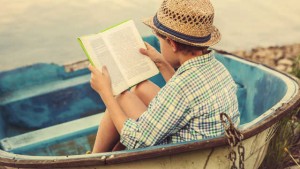
 When you need a reason to escape the annual family dramas, over-egged nog and that last slice of trifle: CIS to the rescue with some great holiday reading suggestions. Tell Auntie Beryl we said it’s mandatory…
Ed Hirsch: Why Knowledge Matters: Rescuing Our Children from Failed Educational Theories. Hirsch rails against the generic skills, post-truth mantra, arguing that the imparting of knowledge is the core work of schools. Knowledge defines the educated person, and is the key to social mobility. Jennifer Buckingham
Bernice Barry: Georgiana Molloy — The Mind that Shines. Beautifully crafted, meticulously researched biography of one of Australia’s first female botanists is a wonderful account of the hardships of life in the colonies and the unstructured, independent nature of scientific inquiry of the time. History intertwined with fascinating snippets of the author’s own adventures researching Molloy over a decade. Meegan Cornforth
J.D. Vance: Hillbilly Elegy. Billed as ‘a memoir of a family and culture in crisis’, it should be called ‘Trump voters: crib notes’. A valuable guide to the fall of the white working class. Simon Cowan
Amos Oz: A Tale of Love and Darkness. Israel’s best-known novelist entwines the unhappy story of his immigrant family with the larger historical story of a people’s frantic search for refuge and Israel’s complicated birth. Anastasia Glushko
Karen Joy Fowler: We are All Completely Beside Ourselves. A story of an unusual family told through the eyes of the only remaining child. Starting in the middle of the tale, with a surprising twist, this book keeps the reader intrigued. Sara Hudson
J Dionne: Why the Right Went Wrong — Conservatism from Goldwater to the Tea Party and Beyond. Argues American conservatism has been a disappointment because conservative politicians made promises they could not keep. Dionne holds that the country needs a return to the conservatism of Eisenhower, charting a moderate course between prudence and dogmatic rigidity. Peter Kurti
Guilera Enders: Gut — The inside story of our body’s most underrated organ. An amazing journey through our digestive system that was surprisingly full of humour and read like an adventure story. Jenny Lindsay
Anthony Doerr: All the Light We Cannot See. A hauntingly beautiful story about a blind French girl and a German boy during WW2. Intricate and moving. It is a cliche but it is one that stays with you after you close the book. Jenny Lindsay
Ivan Rendall: Splash One. A fascinating dive into the history of jet fighter technology, set against the background of world war and cold war defence policy. Karla Pincott
Michael A Vanns: Signalling in the Age of Steam. Belies the trainspotter title with an engrossing account of rail signalling as the new transport spread across Britain, changing society in its wake. Karla Pincott
Niki Savva: The road to ruin — How Tony Abbott and Peta Credlin destroyed their own government. A sensationalist history of the Abbott government, supposedly revealing problems caused when unelected staffers have too much power. Most is reported on record, but look elsewhere for completeness. Michael Potter
Stan Grant: Talking to My Country and The Australian Dream: Blood, History and Becoming. Talking to My Country is listed elsewhere as required reading for the Prime Minister. But the book teaches the wrong lessons about the alleged causes of Indigenous disadvantage: it’s not ‘history’ (colonialism and dispossession) that keeps the minority of Aborigines down, but bad (‘separatist’) policy — a truth that even Grant now accepts in his later Quarterly Essay. Jeremy Sammut
David Pryce-Jones: Fault Lines. Explores in his family circle fracture a Who’s Who of Europe in the late 19th and 20th centuries — from Arafat to Zuckerman, Wodehouse to Woolf, Garbo to Gaddhafi. As the Old World stumbles towards yet another terrifying precipice, this magnificent literary memoir provides an elegiac reflection on the last time the lamps went out. Rebecca Weisser
William Coleman: Only In Australia. In the age of globalisation, Coleman and eminent scholars examine whether Australian exceptionalism amounts to dangerous complacency in a nation which habitually outsources political decision-making to self-important bureaucrats. Rebecca Weisser
Dr Tanveer Ahmed: Fragile Nation. Dubbed Australia’s Theodore Dalrymple, Ahmed writes about his patients living amidst the Mujahedeen and McMansions of western Sydney. But Ahmed has a positive message; when they reject victim-hood, they rediscover resilience. Rebecca Weisser
Home > Commentary > Opinion > Holiday reading…
Holiday reading…
Ed Hirsch: Why Knowledge Matters: Rescuing Our Children from Failed Educational Theories. Hirsch rails against the generic skills, post-truth mantra, arguing that the imparting of knowledge is the core work of schools. Knowledge defines the educated person, and is the key to social mobility. Jennifer Buckingham
Bernice Barry: Georgiana Molloy — The Mind that Shines. Beautifully crafted, meticulously researched biography of one of Australia’s first female botanists is a wonderful account of the hardships of life in the colonies and the unstructured, independent nature of scientific inquiry of the time. History intertwined with fascinating snippets of the author’s own adventures researching Molloy over a decade. Meegan Cornforth
J.D. Vance: Hillbilly Elegy. Billed as ‘a memoir of a family and culture in crisis’, it should be called ‘Trump voters: crib notes’. A valuable guide to the fall of the white working class. Simon Cowan
Amos Oz: A Tale of Love and Darkness. Israel’s best-known novelist entwines the unhappy story of his immigrant family with the larger historical story of a people’s frantic search for refuge and Israel’s complicated birth. Anastasia Glushko
Karen Joy Fowler: We are All Completely Beside Ourselves. A story of an unusual family told through the eyes of the only remaining child. Starting in the middle of the tale, with a surprising twist, this book keeps the reader intrigued. Sara Hudson
J Dionne: Why the Right Went Wrong — Conservatism from Goldwater to the Tea Party and Beyond. Argues American conservatism has been a disappointment because conservative politicians made promises they could not keep. Dionne holds that the country needs a return to the conservatism of Eisenhower, charting a moderate course between prudence and dogmatic rigidity. Peter Kurti
Guilera Enders: Gut — The inside story of our body’s most underrated organ. An amazing journey through our digestive system that was surprisingly full of humour and read like an adventure story. Jenny Lindsay
Anthony Doerr: All the Light We Cannot See. A hauntingly beautiful story about a blind French girl and a German boy during WW2. Intricate and moving. It is a cliche but it is one that stays with you after you close the book. Jenny Lindsay
Ivan Rendall: Splash One. A fascinating dive into the history of jet fighter technology, set against the background of world war and cold war defence policy. Karla Pincott
Michael A Vanns: Signalling in the Age of Steam. Belies the trainspotter title with an engrossing account of rail signalling as the new transport spread across Britain, changing society in its wake. Karla Pincott
Niki Savva: The road to ruin — How Tony Abbott and Peta Credlin destroyed their own government. A sensationalist history of the Abbott government, supposedly revealing problems caused when unelected staffers have too much power. Most is reported on record, but look elsewhere for completeness. Michael Potter
Stan Grant: Talking to My Country and The Australian Dream: Blood, History and Becoming. Talking to My Country is listed elsewhere as required reading for the Prime Minister. But the book teaches the wrong lessons about the alleged causes of Indigenous disadvantage: it’s not ‘history’ (colonialism and dispossession) that keeps the minority of Aborigines down, but bad (‘separatist’) policy — a truth that even Grant now accepts in his later Quarterly Essay. Jeremy Sammut
David Pryce-Jones: Fault Lines. Explores in his family circle fracture a Who’s Who of Europe in the late 19th and 20th centuries — from Arafat to Zuckerman, Wodehouse to Woolf, Garbo to Gaddhafi. As the Old World stumbles towards yet another terrifying precipice, this magnificent literary memoir provides an elegiac reflection on the last time the lamps went out. Rebecca Weisser
William Coleman: Only In Australia. In the age of globalisation, Coleman and eminent scholars examine whether Australian exceptionalism amounts to dangerous complacency in a nation which habitually outsources political decision-making to self-important bureaucrats. Rebecca Weisser
Dr Tanveer Ahmed: Fragile Nation. Dubbed Australia’s Theodore Dalrymple, Ahmed writes about his patients living amidst the Mujahedeen and McMansions of western Sydney. But Ahmed has a positive message; when they reject victim-hood, they rediscover resilience. Rebecca Weisser
• Subscribe
Subscribe now and stay in the loop with our giving appeals, event alerts, newsletters and research updates.
We are always pleased to hear from you. If you have any questions or feedback, please contact us here: