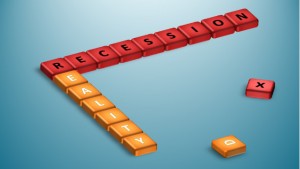
 Recent economic data have put many economy-watchers on recession alert, primed to proclaim the ‘R’ word at the first sight of more weak data. They need to take a reality check.
There are good statistical reasons to doubt that weak June quarter GDP growth heralds a slide into recession. There is a lot of statistical ‘noise’ in the quarterly figures. Half-year data are less jerky, and in the latest half year there was a rise of 1.2% (2.5% annualised) on the previous half year – still below par, but hardly indicative of recession.
The next two quarters’ national accounts will be eagerly awaited by recession watchers in anticipation of the oft-parroted definition of recession being met – namely, two consecutive quarters’ decline in real GDP. However, this rule is arbitrary to the point of silliness. Recessions should only be declared on the basis of a balanced assessment of a range of data over several quarters including employment and unemployment.
Australia’s modern economic history suggests that a recession is unlikely given what is presently known. Recessions in the past have been associated with credit squeezes, wage explosions or recessions abroad, particularly in the United States. None of these conditions is present and the first two are not at all likely to appear in the foreseeable future. A recession or severe growth slow-down abroad has a greater probability, but is still not a likely scenario.
What is clear is that Australia has already entered a period of sub-par growth which is likely to continue for some time and that real living standards are declining largely because of the decline in the terms of trade. While these conditions are largely dictated by external events over which we have no control, this is not an excuse for doing nothing. We need economic policies that will strengthen the foundations for sustainable growth based on stronger investment and productivity growth.
Robert Carling is a Senior Fellow at the Centre for Independent Studies

Home > Commentary > Opinion > R word is ‘reality’
R word is ‘reality’
There are good statistical reasons to doubt that weak June quarter GDP growth heralds a slide into recession. There is a lot of statistical ‘noise’ in the quarterly figures. Half-year data are less jerky, and in the latest half year there was a rise of 1.2% (2.5% annualised) on the previous half year – still below par, but hardly indicative of recession.
The next two quarters’ national accounts will be eagerly awaited by recession watchers in anticipation of the oft-parroted definition of recession being met – namely, two consecutive quarters’ decline in real GDP. However, this rule is arbitrary to the point of silliness. Recessions should only be declared on the basis of a balanced assessment of a range of data over several quarters including employment and unemployment.
Australia’s modern economic history suggests that a recession is unlikely given what is presently known. Recessions in the past have been associated with credit squeezes, wage explosions or recessions abroad, particularly in the United States. None of these conditions is present and the first two are not at all likely to appear in the foreseeable future. A recession or severe growth slow-down abroad has a greater probability, but is still not a likely scenario.
What is clear is that Australia has already entered a period of sub-par growth which is likely to continue for some time and that real living standards are declining largely because of the decline in the terms of trade. While these conditions are largely dictated by external events over which we have no control, this is not an excuse for doing nothing. We need economic policies that will strengthen the foundations for sustainable growth based on stronger investment and productivity growth.
Robert Carling is a Senior Fellow at the Centre for Independent Studies
• Subscribe
Subscribe now and stay in the loop with our giving appeals, event alerts, newsletters and research updates.
We are always pleased to hear from you. If you have any questions or feedback, please contact us here: