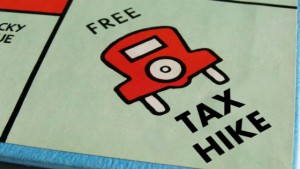
 How would you like an increase in the GST? There are plenty of views on this question, and no indication yet of the outcome. But we do know for sure that the issue will be debated at length. If there is a firm proposal to increase the GST, it will probably be a leading focus of an election campaign. The campaign, and the consideration of legislation by Parliament, will consume public debate for months. There will be inquiries, modelling, media beat ups, case studies… you name it. A tax increase should occur this way, in the full light of day. We should understand all the pros and cons of the change; where the money is going; and why the change is necessary.
What we don’t want is a tax increase that is applied to us with minimal public debate, no careful explanation of why it is needed, and no opportunity for Parliament to reject it.
Yet that is exactly what is happening now. Every taxpayer in Australia is being hit with a tax increase due to bracket creep. We call this a ‘stealth tax’ because it flies under the radar. It isn’t advertised on your tax assessment or your payslip, and the public debate about it is minimal. This stands in stark contrast to the current debate over a GST increase.
Bracket creep occurs because tax thresholds aren’t adjusted for inflation or wages growth. A greater share of your income goes in tax, even if your income only grows by inflation. For example, if your before-tax income goes up by 2%, the same rate as inflation, your after-tax income may only go up by 1.5%. You are effectively 0.5% worse off after correcting for inflation.
To help fix the gap in public debate, we have conducted modelling of the impact of bracket creep since the last change in tax thresholds, which was in 2012–13. In this current year of 2015–16, we estimate that taxpayers are paying an extra $450 per person. However this is forecast to grow rapidly, with the average cost per taxpayer set to be $1,181 per person in three years’ time, which on average is like giving up a year’s pay increase.
Our estimate of the different impact of bracket creep in 2018–19 for incomes from $15,000 to $300,000 is shown in the interactive graph below.
The weekly cost is shown in the interactive graph below. The average tax increase is about $23 per week.
It might appear from these graphs that bracket creep has a greater impact on the wealthy. But this is a misunderstanding of the data. The impact is actually more severe on low and middle income earners when measured using the increase in average tax rates. This is shown in the interactive graph below. The highest impact is on a taxpayer earning around $37,100 (in today’s money) — a person at this income level is forecast to be hit with an increase in their average tax rate of 4.2 percentage points, well above the average increase in tax rate of 2.3 percentage points.
The smallest impact on taxpayers is expected for someone earning around $154,000 in today’s money — further, the impact on millionaires (not shown in this graph) is forecast to be even lower, with someone earning around $7 million receiving a tax increase of less than 0.1 percentage point.
The comparison with the GST debate should be troubling and stark. A GST increase might be regressive, because it hits low income earners harder. However, many proponents of a GST increase are proposing compensation to offset this impact in its entirety for low income earners. By contrast, bracket creep is (broadly) regressive and low income earners are receiving no compensation at all.
In addition, bracket creep involves an increase in personal tax, which is one of the most inefficient taxes levied by the Federal government, while (at least in theory) the GST has a smaller cost to the economy. And as noted earlier, there will be extensive debate over a GST increase while bracket creep is being slapped on us with minimal debate. Furthermore, the GST debate is only about a possible tax increase, while bracket creep is an actual tax increase affecting us all right now.
This is a situation that should not continue. Tax thresholds should be indexed to inflation or (our preference) to wages growth, which will stop taxpayers from being slugged with this inequitable and inefficient tax hike. Of course this will have a budget cost, but why on earth should a GST increase to fix the budget be subject to massive debate, while bracket creep, also to fix the budget, should have little or none? If Parliament wants to impose a tax increase of any kind, it should be debated and not imposed on us by stealth.
Michael Potter is Research Fellow in the Economics Program at the Centre for Independent Studies. He is co-author (with Robert Carling) of the report Exposing the stealth tax: the bracket creep rip-off, which was released on Sunday.

Home > Commentary > Opinion > Stealth tax slugging Australians while we debate GST
Stealth tax slugging Australians while we debate GST
What we don’t want is a tax increase that is applied to us with minimal public debate, no careful explanation of why it is needed, and no opportunity for Parliament to reject it.
Yet that is exactly what is happening now. Every taxpayer in Australia is being hit with a tax increase due to bracket creep. We call this a ‘stealth tax’ because it flies under the radar. It isn’t advertised on your tax assessment or your payslip, and the public debate about it is minimal. This stands in stark contrast to the current debate over a GST increase.
Bracket creep occurs because tax thresholds aren’t adjusted for inflation or wages growth. A greater share of your income goes in tax, even if your income only grows by inflation. For example, if your before-tax income goes up by 2%, the same rate as inflation, your after-tax income may only go up by 1.5%. You are effectively 0.5% worse off after correcting for inflation.
To help fix the gap in public debate, we have conducted modelling of the impact of bracket creep since the last change in tax thresholds, which was in 2012–13. In this current year of 2015–16, we estimate that taxpayers are paying an extra $450 per person. However this is forecast to grow rapidly, with the average cost per taxpayer set to be $1,181 per person in three years’ time, which on average is like giving up a year’s pay increase.
Our estimate of the different impact of bracket creep in 2018–19 for incomes from $15,000 to $300,000 is shown in the interactive graph below.
The weekly cost is shown in the interactive graph below. The average tax increase is about $23 per week.
It might appear from these graphs that bracket creep has a greater impact on the wealthy. But this is a misunderstanding of the data. The impact is actually more severe on low and middle income earners when measured using the increase in average tax rates. This is shown in the interactive graph below. The highest impact is on a taxpayer earning around $37,100 (in today’s money) — a person at this income level is forecast to be hit with an increase in their average tax rate of 4.2 percentage points, well above the average increase in tax rate of 2.3 percentage points.
The smallest impact on taxpayers is expected for someone earning around $154,000 in today’s money — further, the impact on millionaires (not shown in this graph) is forecast to be even lower, with someone earning around $7 million receiving a tax increase of less than 0.1 percentage point.
The comparison with the GST debate should be troubling and stark. A GST increase might be regressive, because it hits low income earners harder. However, many proponents of a GST increase are proposing compensation to offset this impact in its entirety for low income earners. By contrast, bracket creep is (broadly) regressive and low income earners are receiving no compensation at all.
In addition, bracket creep involves an increase in personal tax, which is one of the most inefficient taxes levied by the Federal government, while (at least in theory) the GST has a smaller cost to the economy. And as noted earlier, there will be extensive debate over a GST increase while bracket creep is being slapped on us with minimal debate. Furthermore, the GST debate is only about a possible tax increase, while bracket creep is an actual tax increase affecting us all right now.
This is a situation that should not continue. Tax thresholds should be indexed to inflation or (our preference) to wages growth, which will stop taxpayers from being slugged with this inequitable and inefficient tax hike. Of course this will have a budget cost, but why on earth should a GST increase to fix the budget be subject to massive debate, while bracket creep, also to fix the budget, should have little or none? If Parliament wants to impose a tax increase of any kind, it should be debated and not imposed on us by stealth.
Michael Potter is Research Fellow in the Economics Program at the Centre for Independent Studies. He is co-author (with Robert Carling) of the report Exposing the stealth tax: the bracket creep rip-off, which was released on Sunday.
• Subscribe
Subscribe now and stay in the loop with our giving appeals, event alerts, newsletters and research updates.
We are always pleased to hear from you. If you have any questions or feedback, please contact us here: